
Important Lessons: Overcoming Obstacles and Fostering Character
- Black student-athletes have historically faced and overcome significant challenges while excelling in both academics and athletics
- Your child can learn valuable character traits from these pioneers, including resilience, maintaining dignity under pressure, and a commitment to education
- Sports have been a powerful vehicle for societal change, showing how athletic accomplishment can change society
- The D. Brown Foundation carries on this legacy by helping current student-athletes develop the same strength and character
- Teaching your child about these trailblazers provides them with powerful role models who demonstrate perseverance in the face of seemingly impossible obstacles
Every significant achievement begins with the decision to try. For today’s young athletes, especially those who are facing their own challenges, understanding the journeys of those who broke down barriers can change their perspective on what is possible. The path to excellence is not just about athletic ability—it’s about character, perseverance, and using your platform for a purpose greater than yourself.
Throughout the history of America, black student-athletes have changed not only their sports but also the society. Their stories are more than just sports stories – they are powerful lessons that go beyond the athletic fields and courts. As you guide your child through their athletic journey, these pioneers offer templates for overcoming obstacles, maintaining dignity under pressure, and using success to uplift others.
“Jackie Robinson left lasting legacy …” from baseballhall.org and used with no modifications.
Jackie Robinson: The Trailblazer
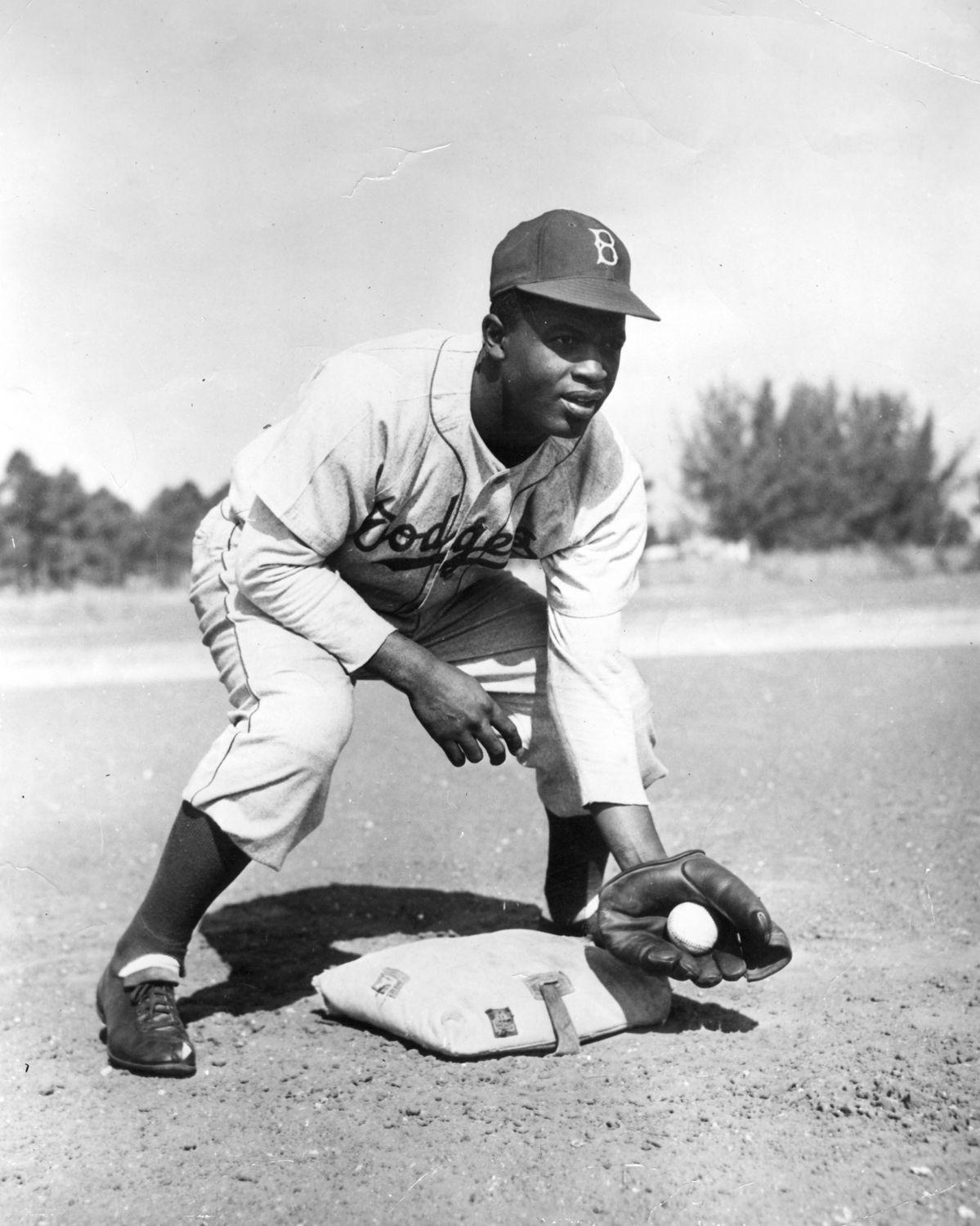
Prior to Jackie Robinson’s historic integration of Major League Baseball in 1947, he was an outstanding student-athlete at UCLA, earning letters in four sports: baseball, basketball, football, and track. It’s easy to forget that Robinson was much more than just a baseball player—he was a scholar who knew that his education was something that could never be taken away from him. His athletic career in college prepared him for the enormous pressure he would later face as the man selected to shatter baseball’s color barrier.
From College Athlete to MLB Legend
Robinson’s college years were a testament to his exceptional athletic prowess. At UCLA, he made history by becoming the first athlete to letter in four sports, all the while maintaining academic standards and excelling in multiple athletic fields. This foundation of excellence in college sports set the stage for the disciplined mindset he would need when he took on the tremendous pressure of integrating Major League Baseball with the Brooklyn Dodgers. His journey serves as a lesson to young athletes that cultivating excellence in multiple areas—not just early specialization—fosters the adaptability and mental toughness needed to face life’s greatest challenges.
Confronting Prejudice with Grace and Composure
Robinson’s tale isn’t just a story of athletic skill that resonates with young athletes—it’s a story of character. When Branch Rickey, a Dodgers executive, chose Robinson to shatter the color barrier in baseball, he did so not just because of his ability, but also because of his demeanor. Robinson agreed to Rickey’s tough demand: he would not react to the unavoidable racism, mockery, and even physical violence he would encounter for three years. Instead, his performance would do the talking, much like the student-athlete who embarked on an exploration to Malawi, showcasing resilience and determination.
Despite the death threats, the attempts to spike him with cleats, the pitchers aiming for his head, and the hotels that denied him service while on the road with his team, Robinson remained calm. He let his outstanding performance on the field, which earned him the Rookie of the Year and eventually MVP awards, speak for itself. This level of restraint took more strength than lashing out in anger ever could have.
Teach Your Child: How to Maintain Composure Under Pressure
Jackie Robinson’s example offers a powerful lesson for your young athlete when they face unfair treatment—whether from referees, opposing players, or even teammates. Have a conversation with your child about how Robinson’s restraint wasn’t a sign of weakness; it was a strategic strength that changed people’s minds through excellence rather than arguments. Ask them to identify situations where they’ve felt unfairly treated, then discuss how responding with dignity and elevated performance, rather than anger, often proves more effective. For more insights, explore how another student-athlete overcame challenges and achieved excellence.
Teach them that there are times when it is necessary to speak out, but there are also times when the most powerful response is to let your accomplishments do the talking. Robinson’s legacy shows us that sometimes the best form of protest is simply to excel. For more about influential athletes, check out the most influential African American athletes who have changed sports forever.
“A life is not important except in the impact it has on other lives.” — Jackie Robinson
Wilma Rudolph: Overcoming Impossible Odds
Wilma Rudolph’s

“How Wilma Rudolph Overcame Early Health …” from www.biography.com and used with no modifications.
journey from a child in leg braces to becoming “the fastest woman in the world” stands as perhaps the greatest comeback story in sports history. Born prematurely and weighing just 4.5 pounds, Rudolph contracted infantile paralysis (caused by polio) at age four. Doctors told her mother that Wilma would never walk normally. Not only did she walk, but she became the first American woman to win three gold medals in a single Olympics—an achievement that began with her remarkable college career at Tennessee State University.
From Polio to the Podium
Wilma Rudolph’s journey from a child who couldn’t walk without braces to an Olympic champion is one of the most remarkable comeback stories in sports history. After years of her mother’s devoted home treatments and her own willpower, Rudolph was able to shed her leg braces at age 12 and started playing basketball in high school. Her quickness on the court caught the eye of Tennessee State University track coach Ed Temple, who saw her untapped potential and invited her to train with his collegiate program while she was still in high school.
At just 16 years old, Rudolph had already secured a position on the 1956 U.S. Olympic team, where she won a bronze medal in the 4×100-meter relay. However, her most significant victory was yet to come. At the 1960 Rome Olympics, Rudolph became the first American woman to win three gold medals in a single Olympic Games. Her story is especially important for student-athletes because she achieved these feats while she was actively studying at Tennessee State University, showing that it is possible to excel both academically and athletically.
Her Commitment to Education Beyond Sports
Despite being internationally recognized for her athletic prowess, Rudolph’s dedication to her education is what truly defines her as a student-athlete. Even after winning the Olympics and gaining sudden fame, Rudolph stayed committed to finishing her bachelor’s degree in education at Tennessee State. She knew that her sports career would eventually come to an end, but her education would last her a lifetime.
Rudolph chose to retire at the prime of her career, at just 22 years old, and went back to Tennessee State to finish her degree. Her decision underscored her belief that while athletic success is significant, it is fleeting. She later became a teacher and a coach, using her education to motivate generations of young people, especially those in underserved communities.
Rudolph used sports as a stepping stone, but it was her education that gave her the confidence to take the next step. She frequently mentioned how her teachers and coaches at Tennessee State influenced not only her athletic ability, but also her perspective on the world and her commitment to helping others in the same way she was helped.
Teach Your Child: The Power of Self-Belief
When your child encounters obstacles or is given disheartening news, Rudolph’s story provides a strong lesson that medical diagnoses, others’ views, and current restrictions do not dictate future potential. Help your child recognise their own “leg braces”—whether they are physical restrictions, learning difficulties, or self-esteem problems—and devise methods to conquer them through gradual goal-setting, recognition of minor triumphs, and consistent hard work. For inspiration, consider the story of a student-athlete’s exploration to Malawi, which demonstrates the power of perseverance and self-belief.
Arthur Ashe: The Intellectual Athlete

“UCLA Honors Legacy of Arthur Ashe on …” from www.college.ucla.edu and used with no modifications.
Arthur Ashe redefined the concept of a Black athlete, proving that intellectual growth and social awareness are just as crucial as sporting prowess. As the first Black man to clinch singles titles at Wimbledon, the US Open, and the Australian Open, Ashe used his fame to fight for civil rights, education, and worldwide humanitarian causes, all while achieving academic distinction during his college career at UCLA.
His Groundbreaking Outlook on Tennis and Education
Ashe was different from a lot of top-tier athletes who consider education to be less important than sports. He was equally committed to both. While he was earning his tennis scholarship at UCLA, he managed to keep up a strong academic record, and he ultimately graduated with a degree in business administration. His commitment to education wasn’t just about having something to fall back on—it was about becoming a well-rounded person who could make a difference in the world outside of the tennis court.
Ashe was a game-changer because he refused to let his athletic identity be separate from his academic and social interests. He was an avid reader, an eloquent writer, and he tackled complex social issues head-on at a time when many people expected Black athletes to just “shut up and play.” By succeeding both in the classroom and on the court, he created a new model for what it means to be a student-athlete.
For Ashe, education was not just about school work, it was about developing the intellectual tools to understand systems of inequality and articulate pathways to change. His UCLA education provided the foundation for his later work as an author, activist, and international humanitarian.
Exercising His Influence for Societal Transformation
Ashe stood out because he recognized that his athletic success provided him with a platform, and with that, came responsibility. Even as a college student, he took part in protests against discrimination and later became a vocal critic of apartheid in South Africa. He established educational and health programs, wrote prolifically on Black sports and history, and continually campaigned for equal opportunity in tennis and beyond. His legacy continues to inspire young athletes, such as the student-athlete exploring opportunities in Malawi.
Encourage Your Child to Excel in All Areas
Ashe’s life teaches young athletes that it’s just as important to develop their minds as it is to develop their bodies. Encourage your child to view academics not as a necessary chore to stay eligible, but as a crucial part of becoming the best person they can be. Help them understand that their role in athletics—whether they’re the team captain or a supportive teammate—gives them the chance to stand for something more than just individual success. To learn more about athletes who have made significant impacts, check out this article on influential African-American athletes.
Althea Gibson

“Tennis Legend Althea Gibson …” from www.maxrambod.com and used with no modifications.
: The Silent Game Changer
Before the era of Serena and Venus Williams, Althea Gibson was a trailblazer who shattered racial boundaries in a time when tennis was heavily segregated. As the first Black player to compete in the U.S. National Championships (now the US Open) and Wimbledon, Gibson’s journey from the playgrounds of Harlem to the world stage of tennis shows how athletic ability, paired with silent resolve, can break through even the toughest obstacles.
Trailblazing in Tennis and Golf
- The first Black player to compete in the U.S. National Championships (1950) and Wimbledon (1951)
- The first Black player to secure a Grand Slam title (French Championships, 1956)
- Claimed consecutive Wimbledon and U.S. National championships (1957-1958)
- Subsequently became the first Black woman to join the Ladies Professional Golf Association (LPGA)
Throughout Gibson’s tennis career, she experienced isolation and exclusion. She was frequently denied accommodation in the same hotels as white players and was barred from club facilities except during actual matches. Despite these humiliations, she maintained a remarkable level of composure. Her strength lay not in vocal protests, but in her relentless excellence, which made it impossible for her to be overlooked.
One aspect of Gibson’s story that is often not given enough attention is the fact that she needed help to achieve her breakthrough. Former tennis champion Alice Marble was a vocal supporter of Gibson’s right to participate in the U.S. National Championships, and she wrote a harsh editorial in American Lawn Tennis magazine in which she criticized the hypocrisy of the sport. This story shows young athletes that personal resilience is important, but so are strategic partnerships when it comes to making a difference.
Even after dominating the world of tennis, Gibson didn’t stop there. She shattered another racial barrier by becoming the first Black woman to compete on the professional golf tour. This change showed her athletic adaptability and her resolve to break down barriers in various fields.
Her School Years at Florida A&M
Gibson’s sports career was closely tied to her academic growth at Florida A&M University (FAMU), a historically Black university where she was given a tennis and basketball scholarship. At FAMU, she not only honed her tennis abilities but also received the education that would support her after her sports career. Her college years offered both sports opportunities and a supportive educational setting where her skills could thrive.
Gibson juggled multiple sports and her studies while at FAMU, recognizing that education would open up opportunities beyond sports. This groundwork was crucial later in her life when her tennis wins didn’t translate into financial security. She got her bachelor’s degree in physical education, which she later used in her roles as a tennis coach and recreation director.
Gibson’s time at FAMU underscores the historically important part that HBCUs (Historically Black Colleges and Universities) have played in the development of Black student-athletes, offering opportunities when predominantly white institutions shut them out. For many trailblazing Black athletes, HBCUs provided the critical mix of athletic development, academic progress, and community backing necessary to smash barriers.
Teaching Your Child: Pioneering With Grace
Gibson’s legacy is a lesson in being the first with dignity. When your child is faced with being “the only one” — whether due to race, gender, or other factors — Gibson’s example provides guidance on how to carry oneself with grace. Encourage your child to focus on excellence over acceptance, knowing that performance can alter perceptions where words may fall short.
Teach them that to be a trailblazer, you need to have a thick skin and think strategically. Gibson knew when to pick her battles and when to let her racquet do the talking. Knowing when to push and when to quietly persevere is a valuable lesson for young athletes trying to navigate the complicated social dynamics of sports.

“Jesse Owens | Official Website | Track …” from jesseowens.com and used with no modifications.
Jesse Owens: Exceptional Performance Under Intense Pressure
There are only a handful of athletes who have performed on a stage with as much pressure as Jesse Owens at the 1936 Berlin Olympics. Adolf Hitler planned to use the Games as a showcase for “Aryan superiority.” Owens, a standout student-athlete from Ohio State University, delivered what might be the most politically significant athletic performance in history. He won four gold medals and destroyed Hitler’s racist propaganda on the global stage.
His Legendary Time at Ohio State University
Prior to his Olympic victories, Owens made a name for himself at Ohio State University, earning the nickname “Buckeye Bullet.” His time in college was highlighted by his performance at the 1935 Big Ten Championships, where he set three world records and matched another—all in less than an hour, and all while suffering from a back injury. This incredible feat, which many in the track and field community regard as the greatest single-day athletic performance in history, showed his ability to perform at a high level even when dealing with physical adversity.
Even with his athletic accomplishments at Ohio State, Owens was not immune to the harsh realities of American racism. Despite his fame on the track, he was not allowed to live in the same dormitories as his white peers on campus. When traveling for competitions, he was not always allowed to dine in the same restaurants as his white teammates. These experiences provided him with a personal understanding of the discrimination he would later help to confront through his athletic prowess.
Confronting Nazi Ideology in Berlin
Owens’s arrival in Berlin for the 1936 Olympics was met with an antagonistic atmosphere that was intended to display Hitler’s beliefs of Aryan supremacy. The weight on his shoulders was more than just personal success—his performance would either support or disprove the harmful racist ideologies that were being advertised on the global stage. In this high-pressure situation, Owens excelled, earning gold medals in the 100 meters, 200 meters, long jump, and 4×100 meter relay.
One important aspect of Owens’ story that is often forgotten is his unlikely friendship with German long jumper Luz Long. Despite the disapproval of Nazi officials, Long offered Owens technical advice during the competition. This act of sportsmanship, which crossed ideological lines, showed how athletic competition can rise above even the most severe political divisions. This is a meaningful lesson for young athletes in our divided world today, much like the story of a student-athlete’s journey to Malawi that highlights the power of sports to transcend boundaries.
What Your Child Can Learn: Delivering Your Best When The Stakes Are High
Owens’ story provides a wealth of learning opportunities for young athletes about delivering under pressure. Teach your child that their most significant achievements may come when they face their most substantial challenges. Help them prepare mentally for high-pressure situations by visualizing success and focusing on the process rather than the result. Like Owens, who focused on his running technique rather than the political climate around him, encourage your child to focus on what they can control.
His story also shows how athletic performance can go beyond sport to make broader societal statements. While your child may not compete on an Olympic stage, help them see how their conduct and performance in sports can challenge stereotypes and change perceptions in their own communities. For instance, you can explore stories like the student-athlete’s exploration to Malawi to inspire them.
Muhammad Ali: The Force of Belief
Muhammad Ali

“Boxing legend Muhammad Ali dies at 74 …” from www.bbc.com and used with no modifications.
surpassed the realm of sports to become one of the most impactful cultural icons of the 20th century. His path from Olympic gold medal winner to world heavyweight champion to conscientious objector shows how sports success can offer a stage for principled positions that transform society.
From Olympic Gold to Heavyweight Champion: The Journey
The athletic journey of Ali started with his gold medal win in the 1960 Rome Olympics. At that time, he was an 18-year-old boxing prodigy known as Cassius Clay. His Olympic success was the launch pad for his professional career, which reached its pinnacle when he shocked everyone by defeating Sonny Liston to become the heavyweight champion in 1964. In his early career, Ali brought a revolution in boxing with his unique combination of speed, agility, and tactical intelligence. He was famous for “floating like a butterfly and stinging like a bee.”
Ali was not only an extraordinary athlete, but he was also willing to redefine what an athlete could be. He brought an unprecedented level of charisma, verbal creativity, and intellectual engagement to the world of sports, refusing to separate his athletic identity from his evolving political and religious beliefs. This holistic approach to his public image changed the way athletes interact with society, creating a model for the socially conscious athlete-activist that continues to shape sports today.
Forfeiting His Best Years for His Convictions
During the peak of his athletic career in 1967, Ali made the remarkable choice to reject military induction during the Vietnam War. He cited his Islamic faith and his ethical opposition to the war as reasons for his decision. This act of principle cost him his heavyweight title, his boxing license, and nearly four years of his athletic prime as his case was processed in the courts. Despite the criticism he received at the time, his sacrifice showed an uncommon level of moral courage—he put principle before professional success and financial profit.
Ali’s position was likely the most significant instance of an athlete using their fame to make a moral statement in American history. When he returned to boxing in 1970, he continued to strive for athletic greatness while remaining committed to advocating for racial justice, religious freedom, and global peace. His subsequent athletic accomplishments—reclaiming the heavyweight title from George Foreman in the renowned “Rumble in the Jungle”—became inseparable from his reputation as a principled advocate for human dignity.
Lesson for Your Child: The Bravery to Stick to Your Beliefs
Ali’s life story teaches young athletes that there are things that are more important than winning or getting a trophy. Help your child identify and express their core values, and then talk about how these values might help guide difficult decisions in sports and in life. Use Ali’s story to show that real bravery often involves accepting the consequences of standing up for what you believe in, instead of just taking the easy way out.
Help your child to look beyond the world of sports and form educated views on important matters. They may never face choices as significant as Ali’s, but it’s important for them to know that character is more important than success, and using their sports platform responsibly is part of their growth as a well-rounded individual.
How to Share These Motivational Stories With Your Kid
These tales of trailblazing Black student-athletes provide potent lessons for kids at different growth phases. The trick is to tailor these stories to your kid’s age and comprehension, emphasizing the aspects most pertinent to their present experiences while laying the groundwork for more profound discussions as they grow older.

Discussing Racial Barriers at a Child’s Level
When talking to your younger children (ages 6-9), focus on the grit and tenacity of these athletes. Highlight their relentless practice to become the best, how they bounced back from injuries or setbacks, and their unwavering belief in their dreams. A basic explanation of the unfair rules these athletes had to deal with can help children start to understand fairness without overloading them with complex historical facts.
For pre-teens (10-13), you can start to have more targeted conversations about segregation, discrimination, and the bravery it took to break down barriers. Connect historical examples to current events they might notice, helping them see both the progress that has been made and the challenges that still exist. Use real examples from these athletes’ lives to illustrate abstract concepts like perseverance, integrity, and moral courage. For instance, you can discuss the story of a student-athlete’s exploration to Malawi to highlight cultural exchange and personal growth.
Making History Relevant to Today’s Struggles
Encourage your child to see the connection between these historical examples and their own lives and the world around them. When they face challenges in sports or school, ask them “What do you think Jackie Robinson would have done in this situation?” or “What do you think Wilma Rudolph would say about quitting when things get hard?” This approach makes these historical figures feel like personal mentors rather than abstract figures from the past. For example, consider the story of a student-athlete’s journey to Malawi as a modern-day parallel of overcoming obstacles and broadening horizons.
By comparing current athletes who are taking a stand on social issues with historical trailblazers, children can see that they are part of an ongoing narrative of progress through principled action and athletic excellence. These discussions also equip them to critically think about how to use their own platforms, no matter how small, to stand up for what is right.
Reinforcing the Lessons with Activities
Encourage your child to keep a “Champion’s Journal” where they can write down their sports goals and include quotes from these trailblazing athletes. They can reflect on how these historical examples might guide them in overcoming their own challenges. This activity not only builds historical awareness but also emotional intelligence as they apply these lessons to their own lives.
Consider sitting down with your child and watching a documentary or a biopic about these athletes. Take the time to pause the movie and discuss the key moments and decisions that these athletes made. For younger children, you might want to focus on the athletic achievements and the personal courage of these athletes. For older children, you might want to delve into the social context and the lasting impact of their stands. After watching the movie, ask your child what they found most impressive or surprising about these stories, perhaps drawing parallels to modern student-athletes making their own marks today.
Further Reading and Resources
- “Young, Black, and Determined: A Biography of Lorraine Hansberry” by Patricia McKissack
- “Wilma Unlimited: How Wilma Rudolph Became the World’s Fastest Woman” by Kathleen Krull
- “Game Changers: The Story of Venus and Serena Williams” by Lesa Cline-Ransome
- “The Story of Jesse Owens” by Carole Boston Weatherford
- “I Am Muhammad Ali” by Brad Meltzer
- “Teammates” by Peter Golenbock (about Jackie Robinson)
Developing Character Through Excellence in Sports and Education
The stories of these Black student-athletes who changed the game reveal a common theme: their achievements in sports were closely tied to their personal growth and academic development. At the D. Brown Foundation Learning Center, we believe in this comprehensive approach to developing young people who are not only successful in sports, but also in life.
The Approach of The D. Brown Foundation to the Development of Student-Athletes
We understand that athletic talent alone does not create a lasting impact. Our programs are focused on developing the entire student-athlete – building academic skills, emotional intelligence, and social awareness along with athletic ability. We refer to this as our “Triple Threat” approach: simultaneously developing the mind, body, and character to prepare young people for success beyond the sports field.
Just as Jackie Robinson demonstrated the importance of restraint and strategic excellence, and Arthur Ashe combined athletic prowess with intellectual curiosity, we instill in our young athletes the understanding that their behavior is just as important as their achievements. Our mentors help student-athletes set personalized goals that include academic success, athletic improvement, and character development. For more inspiration, consider the stories of influential African-American athletes who have left a lasting impact on sports.
How Our Programs are Inspired by these Game-Changers
All of our main programs are inspired by the trailblazers we’ve talked about in this article. Our S.A.A.B. (Student Athletes Against Bullying) program teaches young athletes to use their influence in the same way Muhammad Ali did—standing up for what they believe in and protecting those who are vulnerable. Our Next Up development program embodies Wilma Rudolph’s spirit of overcoming hurdles through setting structured goals and tracking progress in small increments.
Success Stories from Our Community
Meet Marcus, an eighth-grade basketball player who was academically struggling when he first joined our program. Through our College Here We Come (C.H.W.C.) program, he was able to develop study skills that raised his GPA from 2.1 to 3.4, all while continuing to excel in basketball. Inspired by Arthur Ashe’s example of the scholar-athlete, Marcus started to embrace academic excellence with the same passion he had for basketball. Today, he’s attending college on an academic scholarship, still playing the sport he loves but grounded in the knowledge that his education will sustain him for life.
We first met Tanya as a promising track athlete who lacked self-confidence. Through our 1-on-1 Consulting program, she was paired with a mentor who introduced her to the story of Wilma Rudolph and helped Tanya see her own potential. By setting progressive goals and celebrating each small victory, Tanya developed the resilience and self-belief that not only transformed her athletic performance but also her approach to academic challenges. Her journey is reminiscent of Rudolph’s own progression from limitation to extraordinary achievement. Learn more about inspiring journeys like Tanya’s in our Student-Athlete Exploration Program.
How to Help Your Child Become a Game Changer
The Black student-athletes we’ve highlighted didn’t become extraordinary by chance. Each game-changing athlete had parents, coaches, teachers, and mentors who fostered their skills and shaped their character. You can be that influential person for your child, helping them cultivate the traits that made these athletes legendary. For inspiration, consider the story of a student-athlete’s exploration to Malawi and how it shaped their journey.
These pioneers demonstrated that athletic success is truly significant when it is tied to character, education, and purpose. Your child may not be the one to break racial barriers in sports, but they can cultivate the same characteristics that enabled these trailblazers to change their world: resilience, bravery, honesty, and dedication to something greater than themselves.
5 Practical Steps to Begin Today
- Tell these stories thoughtfully. Choose the trailblazer whose story best aligns with your child’s current struggles or goals. Avoid overwhelming them with all seven stories at once.
- Link the past with the present. Help your child recognize current athletes who exhibit similar character traits as these historical figures.
- Place importance on education as well as sports. Set clear academic standards and celebrate academic accomplishments just as much as athletic ones.
- Establish habits of reflection. After practices or games, ask questions that encourage self-awareness: “What did you learn today?” or “How did you deal with that difficult situation?”
- Show the values you want them to learn. Children learn more from what we do than what we say. Show integrity, perseverance, and respect in your own behavior.
Keep in mind that character development is a gradual process that requires consistent reinforcement and genuine conversation. Look for learning opportunities in everyday situations—a referee’s contentious call, a teammate’s disappointment, a coach’s criticism—to talk about how these historical figures might have dealt with similar challenges.
How to Encourage Their Aspirations While Building Resilience
Every one of the trailblazers we’ve talked about encountered enormous hurdles but didn’t let them dictate their lives. You can help your child build the same resilience by praising their hard work instead of just their results, showing them how to see obstacles as chances for improvement, and motivating them to set difficult but reachable objectives. When they experience failure—which all athletes will at some point—help them to handle their feelings in a healthy way and then concentrate on the things they can influence. For inspiration, consider stories like the student-athlete’s journey to Malawi, which demonstrates overcoming challenges.
Get in Touch With the D. Brown Foundation
The D. Brown Foundation Learning Center is ready to assist your family on your journey. Whether your child requires academic assistance through our College Here We Come program, character building through our Next Up initiative, or help navigating the college application process through our Finish Line program, our team has years of experience in cultivating student-athletes who excel in all areas of life.
Commonly Asked Questions
Here are the answers to some questions parents frequently ask about how they can help their children relate to these motivational stories and cultivate the same qualities. For example, understanding the impact of student-athletes like those who have participated in explorations to Malawi can be a great way to inspire and motivate your child.
How can I make my child understand the importance of these athletes in history?
Begin with books, documentaries, or museum exhibits about these figures that are suitable for their age. Link their stories to current events and athletes your child already looks up to. For older children, if possible, visit historical sites—like the Jackie Robinson Museum in New York or the Muhammad Ali Center in Louisville—to make history real. Most importantly, emphasize the character traits that made these athletes outstanding, not just their sports accomplishments.
At what age should I talk to my child about racial barriers in sports?
Children as young as 5-6 can understand the basic concepts of fairness and unfair rules. Use simple, concrete language like “Jackie Robinson wasn’t allowed to play baseball with white players because of unfair rules that existed then.” As children reach 8-10 years, they can grasp more complex historical context. By middle school, most children are ready for nuanced discussions about systemic racism and its ongoing impact. Follow your child’s lead—when they ask questions, provide honest, age-appropriate answers that acknowledge both historical injustice and progress made.
How can student-athletes juggle their academic and athletic commitments?
Student-athletes who thrive both on the field and in the classroom know how to manage their time effectively. They establish study routines that fit in with their training schedules. Show your child how to use tools such as planners or digital calendars to keep track of their assignments and other obligations. Encourage them to talk to their teachers about their athletic commitments and to their coaches about their academic needs. Most importantly, help them see that academics and athletics are not in competition with each other. Instead, they are two sides of the same coin, both of which can help them reach their full potential. This is a lesson that Arthur Ashe and Wilma Rudolph exemplified.
What scholarships are available for student-athletes who are inspired by these stories?
- The Jackie Robinson Foundation provides scholarships and mentoring to high-achieving students of color.
- The Arthur Ashe Jr. Sports Scholars program recognizes student-athletes of color who excel in academics and community service.
- The Jesse Owens Foundation offers scholarships to students who demonstrate academic potential, character, and financial need.
- The D. Brown Foundation works with several organizations to connect qualified student-athletes with scholarship opportunities.
In addition to these specific programs, there are countless academic and athletic scholarships available for students who demonstrate the character traits that these pioneers embodied: perseverance, leadership, academic commitment, and community service.
Keep in mind that an athletic scholarship is only one way to get to college. Many student-athletes go to college on academic scholarships or through financial aid that has nothing to do with athletics. If you raise your child to be a well-rounded student, not just an athlete, they will have more options for getting into college.
The D. Brown Foundation’s College Here We Come program assists families in exploring these options by identifying scholarship opportunities that align with your child’s unique strengths and circumstances.
How can the D. Brown Foundation help my child develop similar character traits?
Our programs are intentionally designed to cultivate the same traits that these trailblazing athletes have shown. We provide:
- Mentorship programs link young athletes with role models who exemplify these character traits
- Character development workshops use sports as a testing ground for developing integrity, perseverance, and leadership
- Academic support services assist student-athletes in excelling in the classroom while fulfilling their athletic obligations
- Community service initiatives highlight the importance of using one’s platform to help others
- Leadership training prepares student-athletes to positively influence their peers
Our integrated approach helps young athletes realize that their worth goes far beyond their athletic prowess. Like the pioneers featured in this article, they have the potential to make a difference in their communities through character, education, and purposeful action. For more insights, explore the stories of influential African-American athletes who changed sports forever.
These trailblazing Black student-athletes remind us that sports aren’t just about winning—they’re about building character, challenging unfairness, and paving the way for others. By helping your child understand these important stories, you’re setting them up for more than just success in sports. You’re helping them make a positive impact on the world.
Want to help your student-athlete develop the character traits that made these pioneers transformative figures in American history? The D. Brown Foundation Learning Center offers programs designed to nurture these qualities in today’s young athletes. Contact us today to learn how we can support your child’s journey toward becoming tomorrow’s trailblazer.
